A bride once told me she almost didn't book me.
She'd seen my work, she liked it, then she went looking for prices and couldn't find them. She sat in a parking lot comparing two artists on her phone, and only picked me because a friend vouched for me in a group chat.
That's the part nobody warns you about. By the time a client talks to you, they've mostly decided from whatever they could find in about ninety seconds.
So when people ask me how to look professional online, they usually think it's a design question. It isn't. It's a question of whether a stranger can find the five things they need in under two minutes and whether what they find looks like a business or a really nice hobby.
Here's what that actually takes.
Your Instagram isn't your business, it's your storefront window
I love Instagram. It helped build my career. I'm not about to tell you to post less.
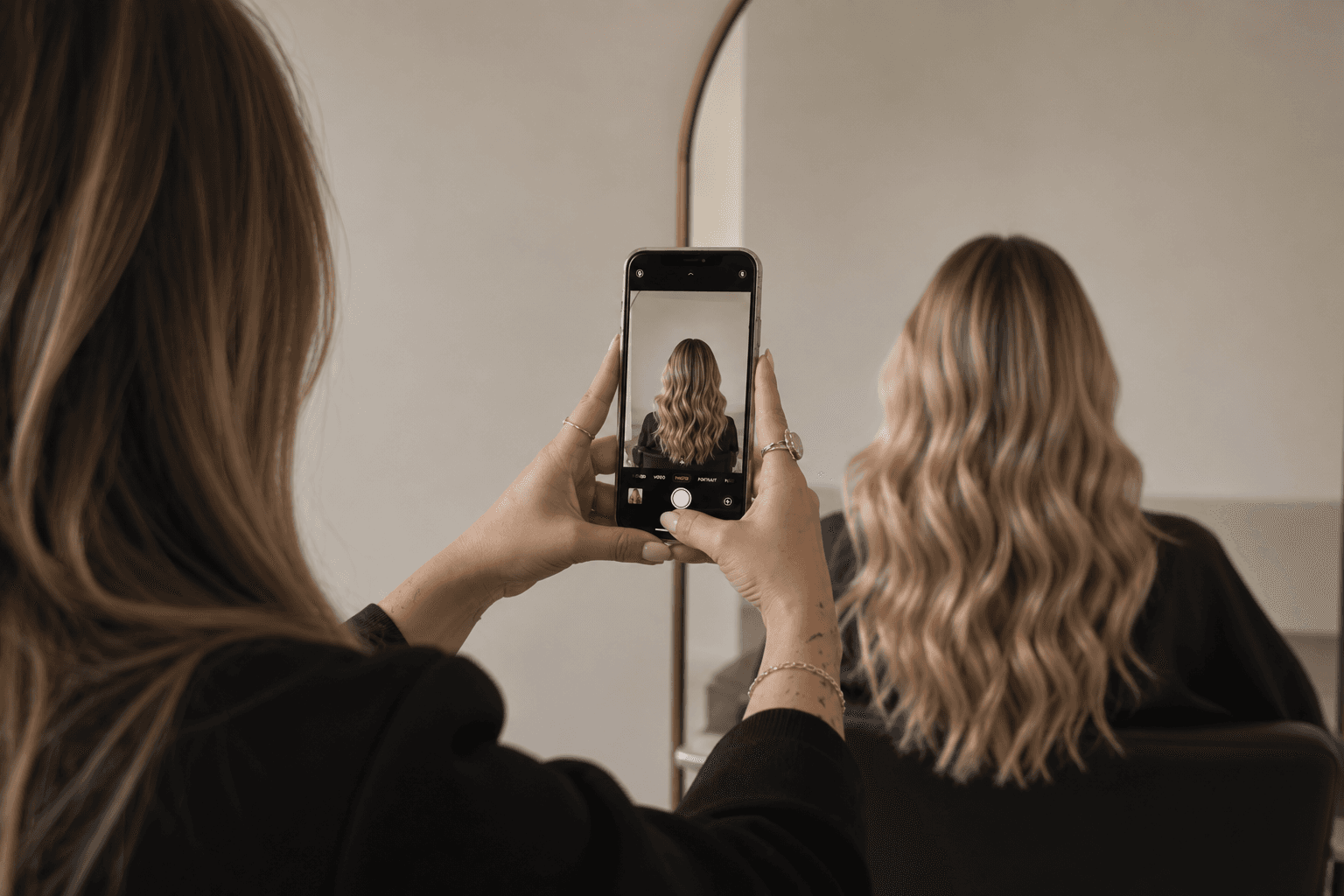
But a storefront window and a store are two different things. The window stops people on the sidewalk. The store is where they look at the price tag, read the reviews, and hand over a card.
Consumers are clear about this, and the numbers are blunt. In DreamHost's 2026 Local Business Trust Index, a survey of 1,201 U.S. consumers, 69% said a website is essential for a local business to be credible. And nearly 4 in 10 have walked away from a purchase because a business didn't have one, rising to 45% among people under 45.
And the money follows the same pattern. On average, people said they were comfortable spending $177 through a business's own website versus $36 through an Instagram or TikTok shop. Same business. Same work. Roughly seven times the trust.
Your feed isn't failing. It's just doing the first half of the job.
How to look professional online: the five things every pro needs
If you only fix one thing this month, fix this list. A stranger should find all five without asking you a single question.
- A portfolio, organized by what you actually do. Not two years of grid posts. Categories. Bridal updos. Color corrections. Editorial. Someone who wants their thing needs to see their thing.
- Your services and what they cost. Even a starting range. "DM for prices" reads as "I haven't decided yet."
- Reviews, somewhere visible. BrightLocal's 2026 survey found 97% of consumers read reviews for local businesses and 68% now won't consider a business under four stars. If your reviews only live in your DMs, they aren't working for you.
- Contact information that's obvious. In the Trust Index, clear contact info was the single most-wanted trust signal at 67% ahead of secure connections (51%).
- One easy link. And make it a real one, a yourname.com is worth the dollars it costs. It looks professional rather than like a side hustle, and it's the link you put front and center in your Instagram bio, your TikTok, your email signature, everywhere people go looking for you.
That's the whole checklist. Nothing on it requires design skills. All of it requires a place to put it that isn't a comment section.
The mistakes I see most (and I've made most of them)
None of these are dramatic. That's exactly why they cost you clients quietly, you never meet the person who decided against you.
Running your business out of your inbox
A real bridal inquiry lands at 9:14am. Three "hey girl 🤍" messages land at 9:16am. By lunch, the actual client is buried under a collab request and someone asking where you got your top.
I've answered DMs at 11pm with a bride in my chair the next morning. It isn't a discipline problem. Your inbox was never a booking system, and it never claimed to be.
Making people ask for prices
Every pro I've taught has a version of this fear: post the price and lose the client. In practice the opposite happens. Vague pricing filters out serious people and attracts hagglers, because the only clients willing to do the work of asking are the ones planning to negotiate.
Letting the details go stale
This is the sneaky one. 34% of consumers named outdated information the most frustrating thing they run into on a business's site, and 60% said an outdated look damages credibility. Old prices, a service you stopped offering, a booking link that 404s, each one reads as "she's not really doing this anymore."
Being invisible outside the app
Instagram is a walled garden. Everything you post there helps people who are already there.
Meanwhile people are searching for you in places your feed can't reach. When someone types "bridal hair artist near me" into Google, an Instagram profile barely surfaces, a real website is what shows up. And it's not just Google now. BrightLocal found 45% of consumers use AI tools like ChatGPT to find local businesses, up from 6% a year earlier. Someone in your city is searching right now, and if everything you've built lives inside one app, you're not in the answer.
Sounding like a hobby
"Check out my page." "Just DM me!" "Sorry for the slow reply, it's been crazy!"
You know what you meant. A stranger hears uncertainty. The words we use about our own work teach people how to take it.
Small changes that make you read as legitimate
You don't need a rebrand. These are the moves that actually shift how people see you:
- Say the price. A starting number is enough. "Bridal hair from $250" answers the question and screens for fit at the same time.
- Show your face. Nearly half of consumers want authentic photos of the person or the space. A real photo of you outperforms a logo every time.
- Answer the five repeat questions once. Do you travel? Do you do extensions on fine hair? How far out are you booked? Write them down once and send the link forever.
- Put your best work where it can be found in a year. Post it on social for reach. File it somewhere permanent so a bride in 2027 can still see it.
- Ask every happy client for a review, the same day. Recency matters more than it used to — 74% of consumers want reviews from the last three months. One ask, added to your close-out routine.
- Get one link that sounds like yours. yourname.com in a bio does something a string of random characters can't. It says: this is a business, and it's mine.
Fix three of these and you'll feel the difference in the quality of your inquiries within a month. Not because your work changed, it was always good. Because you stopped making people guess.
You already did the expensive part
Here's what I want you to sit with: the hard part is done.
The skill took years. The portfolio exists. The audience trusts you. Nobody can hand you that.
What's missing is small and mechanical, a place where all of it lives together, looks like a business, and answers questions while you sleep. And the reason most of us don't have that isn't that we don't want it. It's that "build a website" has always meant a developer, a template you fight with, and a weekend you'll never get back.
That's the part that changed.
Merlin turns your Instagram or TikTok handle into a real website in under 30 seconds. You paste your handle. It pulls your work, your services, and your vibe, and builds the site. You edit it from your phone whenever you want, between clients, in the car, at 11pm. Free to start. No code, no designer, no weekend gone.
Your work already looks professional. Make the rest of it match.
Enter your handle and see your site →